
WATER CONSERVATION AT KANYELELE DORMITORY COMPOUND
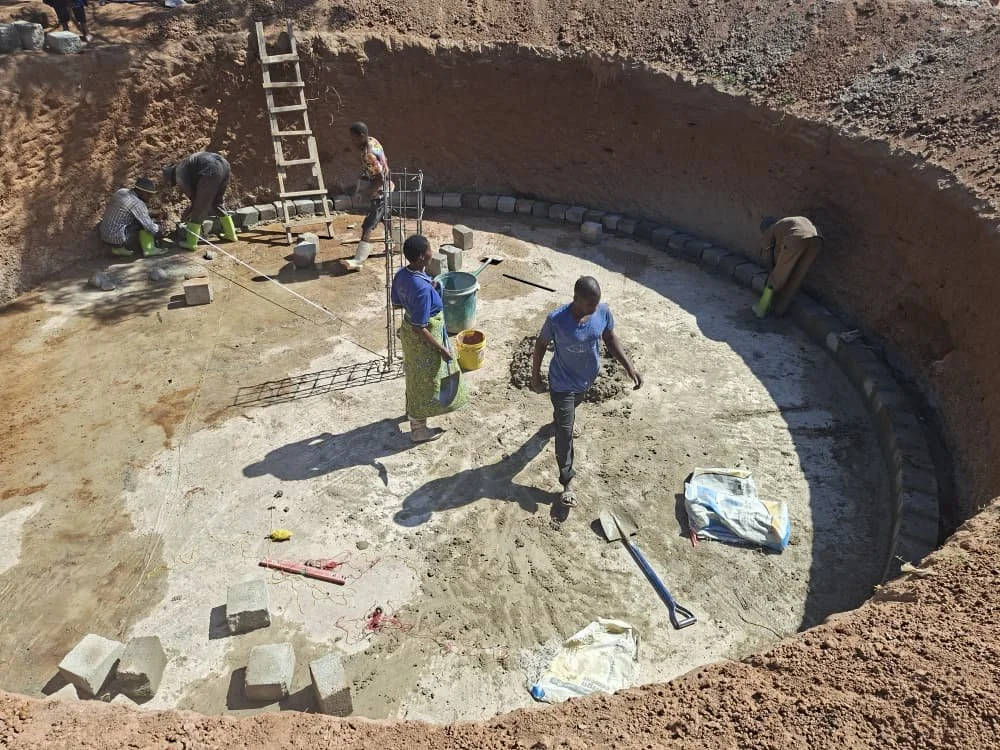
50,000 liter rainwater storage tank under construction, August 2026.
Like most rural communities in Tanzania, Kanyelele has no municipal water or sewage system, so water is a precious resource. Before construction began on the new dormitory compound, students and teachers had to walk one kilometer to bring water from the nearest well. Africa Schoolhouse arranged for a new deep-water well be drilled near the corner of the compound closest to the classrooms to at the start of the project, facilitating construction and serving the new complex.
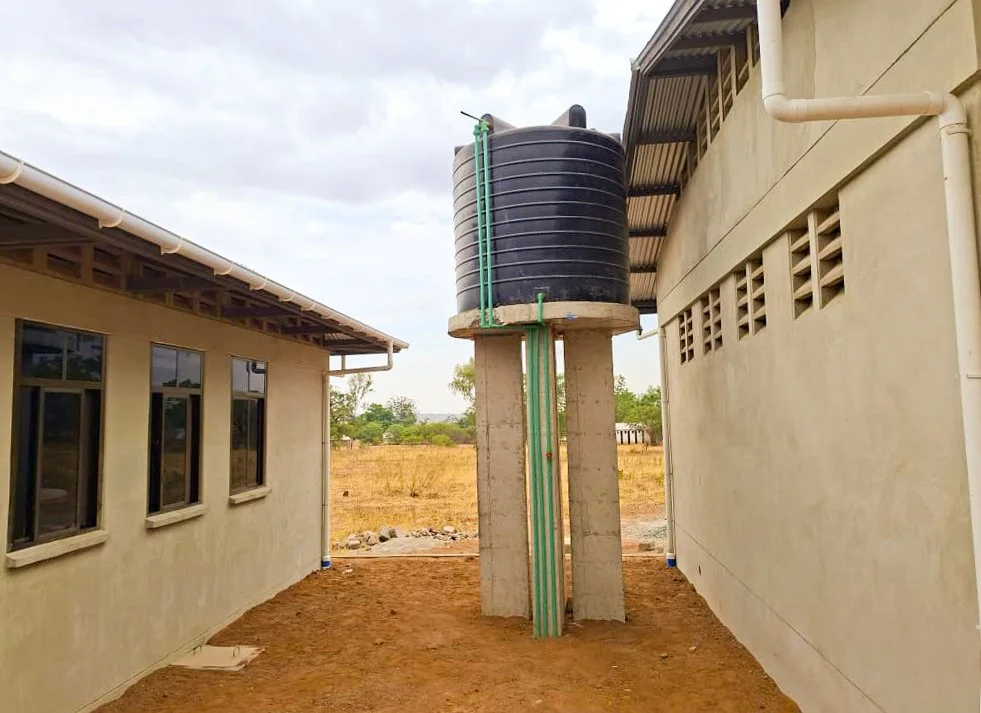
5,000 liter tank serving Hygiene Building.
Students typically use about 20 liters per day for bathing and laundry, so the campus has been designed to utilize rainwater to the greatest degree possible. All buildings have aluminum roofs, with gutters and downspouts linked to a 50,000 liter underground cistern, sized to serve the ultimate three-dorm, 96-girl compound. Each dorm roof can collect about 40,000 liters per month in the rainy season, according to civil engineer Scott Underhill of Haley & Aldrich, who donated his time to help develop the strategy for water management on campus.
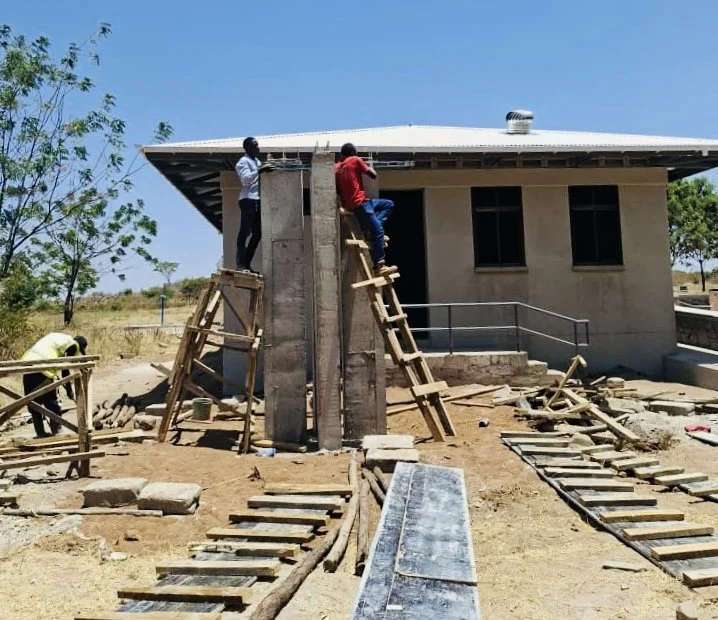
Concrete base for raised tank at kitchen under construction.
Once the rainy season begins, water from the cistern will be drawn via solar-powered pump to a 5,000-liter raised tank between the Dining and Hygiene Buildings. From there, it will flow to spigots at sinks large and low enough to fill buckets. Potable well water for cooking and drinking will be drawn from the well via a solar-powered pump to fill a 4-meter high, 5,000-liter tank at the kitchen. When needed, that water can also flow via gravity to the tank that supplies the Hygiene Building.
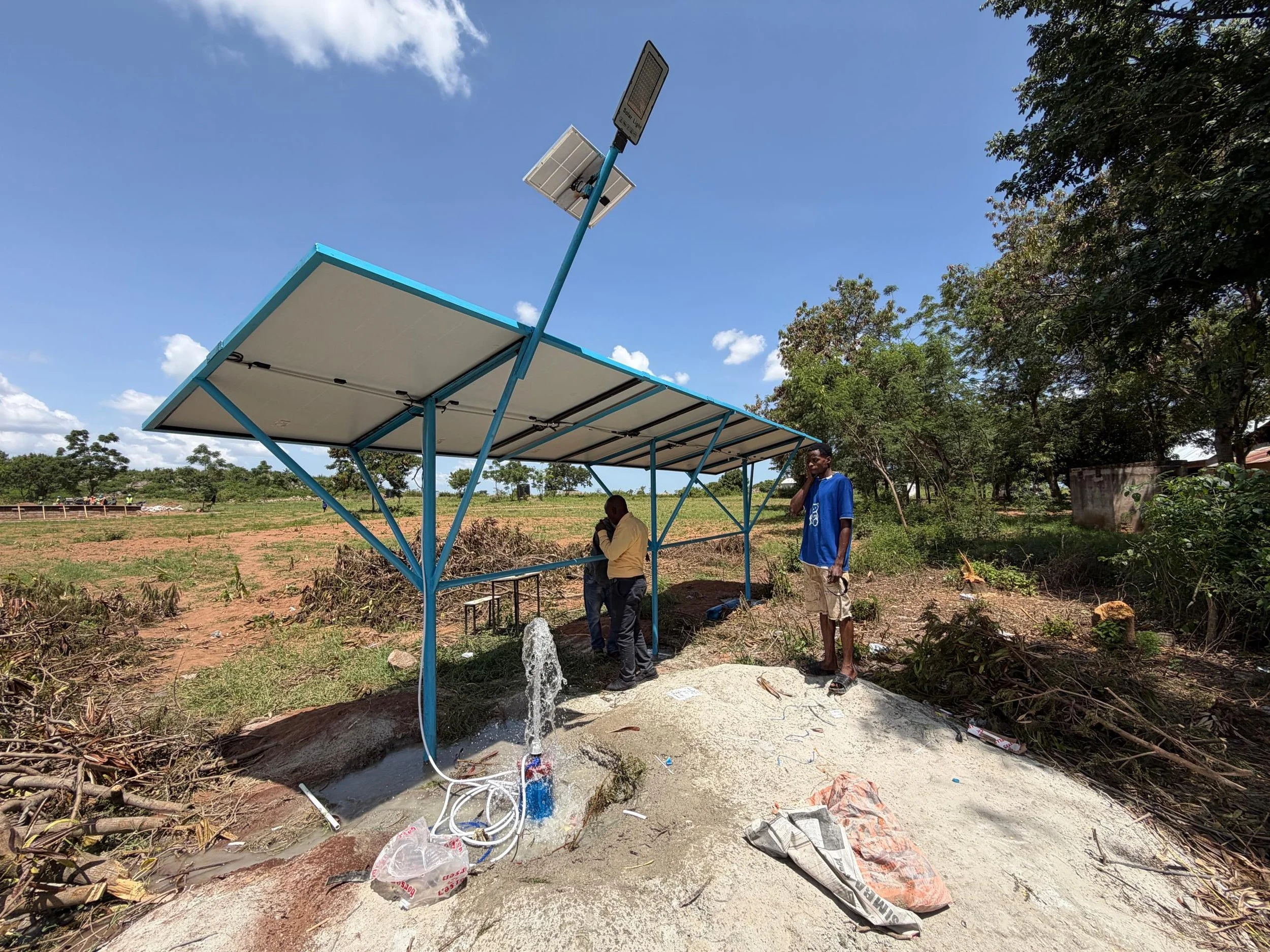
Solar panel powering pump at deepwater wall.
Composting latrines represent another important water conservation feature which have been used at most Africa Schoolhouse projects. Each toilet stall is designed with two pits. South-facing masonry slabs atop deep composting pits allow wastes to decompose safely over time. When the first pit fills up in about two years, it will be sealed off and the companion pit opened. The first pit can then be “harvested” for fertilizer. Water from sinks and showers is drained to a soakaway pit located south or downhill from the building.
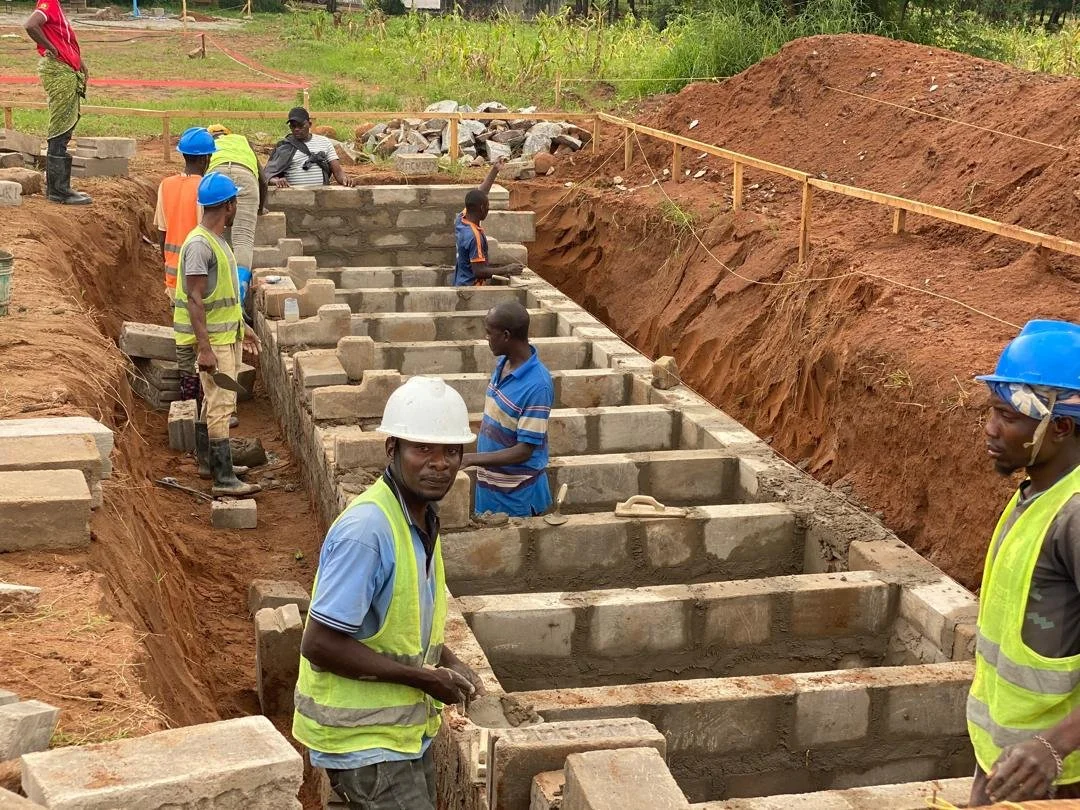
Pits for composting latrines underway.